


Málaga CF

Málaga Club de Fútbol, currently sitting 4th in the second tier of Spanish football at the time of writing, is a club that represents a city breathtaking in both its history and beauty. The team itself won the UEFA Intertoto Cup in 2002 and reached the Champions League quarter-finals in 2013, beating AC Milan and Porto before being stopped by German giants Borussia Dortmund by just a single goal. Since then, the club has faltered somewhat. However, with strong backing from their ownership group, led by Qatari royal Abdullah Al Thani (the Al Thani family are the ruling family of Qatar), they continue to push up the league table with their sights firmly set on a return to La Liga.
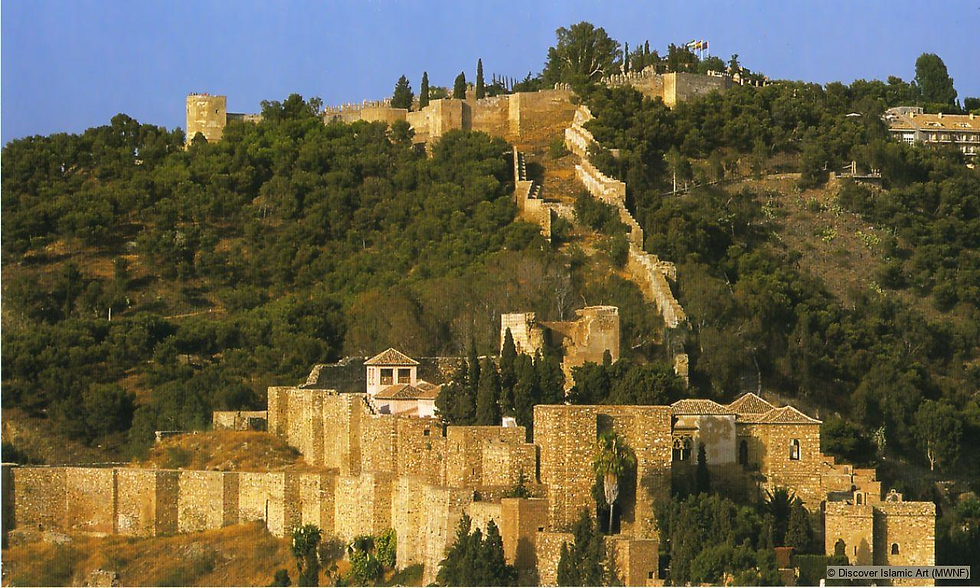
The badge is a beauty. A shield split in two, with the club's name running diagonally across the middle alongside a football. The top half shows the stunning combination of Castle Gibralfaro, which leads down via a castle wall to the fortified palace known as the Alcazaba of Málaga. The lower half features the blue and white stripes of the club's on-field colours.
There is a lot to unpack here. Málaga is the perfect city through which to tell the story of the wider Mediterranean, and therefore much of the Western world. Sitting on the south coast of Spain, it has been a vital trading, fishing and maritime centre for millennia. It can both export the goods of the Spanish interior and project power across the sea and onto the land. As such, it has long been a prize sought after by every empire that has sailed the waters of the Mediterranean.

Founded initially by the Phoenicians, arguably the first large-scale Mediterranean trading empire, the city later came under the control of the Carthaginians, who themselves evolved from Phoenician settlements. These were the Tunisian-based rivals of Rome who famously sent their general, Hannibal, and his elephants through Spain and over the Alps into Italy, trampling Roman armies underfoot and causing all manner of trouble for the Roman Republic.
After the Carthaginians were defeated, Málaga came under Roman rule until the collapse of the Western Roman Empire. The Visigoths then took control of the remnants of Roman Spain, only to be displaced by Islamic armies advancing from North Africa. The hill overlooking the city takes its name from this period: Gibralfaro is derived from the Arabic Jabal Faruh, much as Gibraltar comes from Jabal Tariq. In Arabic, jabal means "mountain" or "hill".

Islamic rulers governed Málaga for centuries (and their Islamic architecture can be seen throughout - see images) from their centre in Córdoba, until they were in turn defeated during the Reconquista by the forces of Isabella and Ferdinand. The conquest brought not only political change but also massacres and expulsions of parts of the Muslim population. It is quite a story, and the city's architecture today reflects these many influences, combining to create one of the most beautiful and fascinating cities in Spain.
The famous Muslim traveller Ibn Battuta visited the city in 1325 and described it as "one of the largest and most beautiful towns in Spain... abundantly supplied with foodstuffs and fruits". He praised its grapes, figs and almonds, noting that its "ruby-coloured Murcian pomegranates have no equal in the world". Another important export was its excellent gilded pottery. The town's mosque was large, with exceptionally tall orange trees in its courtyard.
During the Spanish Civil War, Málaga served as a maritime headquarters for the legitimate Republican government in its struggle against General Franco. Franco ultimately prevailed, but not without assistance from his fascist allies. The Luftwaffe honed its large-scale bombing techniques on Spanish towns such as Guernica, while the Italian Navy sailed into Málaga and bombarded the port. Meanwhile, the British Royal Navy largely stood by as Britain's government pursued a policy of non-intervention.
All of this changing of hands over the centuries has given Málaga a vibrant culture, rich with festivals and local traditions. One of these links directly to the club's nickname, Los Boquerones — "The Anchovies".
The city's summer festival ends in early September with the "Burial of the Anchovy" ceremony and parade. In the days leading up to it, local chefs prepare and compete with dishes made from the city's famous delicacy: the anchovy. For centuries, local fishermen have brought abundant catches ashore, and the region remains renowned for its seafood. Hence this rather unusual festival.

A giant papier-mâché anchovy is constructed and paraded through the city, carried by hundreds of people in masks and fancy dress before being taken to the beach. There, it is ceremonially set alight amid fireworks and celebrations. Symbolically, the event purges the excesses of the summer and marks the transition into the quieter winter months. Visually, it is quite spectacular.

The new Málaga home shirt for the 2026–27 season pays tribute to this tradition, featuring a striking fish-scale pattern across the fabric, while the green and red trim references the colours of the regional flag.
All in all, Málaga's history tells the story not just of Europe, but also of how wonderfully eccentric its people can be.
I love it.


Comments