


Celta Vigo
This is an absolute beauty of a badge and I had a lot of fun researching it. One of those that you assume is so simple, with maybe just one story behind it, but you begin to unwrap it and you end up going down one of the deepest rabbit holes. So, without further ado, let’s #GetTheBadgeIn for Real Club Celta de Vigo!
The city of Vigo in Galicia (that bit of northern Spain that sits above Portugal and looks out into the Atlantic) is about as historic as you can get. Built on a natural harbour, it was a shelter from the harsh Atlantic winds and a gateway to the interior of the Iberian Peninsula.
Their football team plays in the top league, La Liga and, thanks to their iconic colours, they are known as Os Celestes (The Sky Blues). They have never won the league or the famous Copa del Rey cup – but they have a long history and have enjoyed a famous Champions League run in 2003–04 where they were beaten by Arsenal, and in the 2016–17 Europa League they were beaten by Manchester United in the semi-finals. As a result they are quite well known in the UK and across Europe.
But everything about this team is deeply rooted in the region’s history and heritage. In 1923 Spain’s oldest newspaper (still publishing), Faro de Vigo, led a push to unite the town’s two teams – Real Vigo Sporting and Real Fortuna. After a number of years where the Basque teams had dominated football the Galicians felt they needed to come together to better face off their rivals to the east of the country. Accordingly the two teams merged and became Celta Vigo.
There is another Galician team – Deportivo de La Coruña – with whom Celta Vigo play the fierce Galician derby. Football arrived early to the Iberian Peninsula from English sailors and Vigo quickly adopted the game and made it their own. One of the club’s earliest trophies came in 1927 when they played against a team of English sailors in the Copa del Rey Alfonso XIII, winning 4–1.
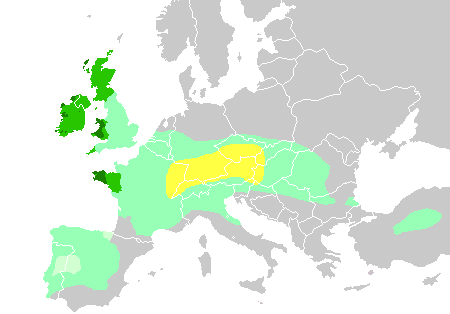
The club takes its name, Celta, from the ancient Celtic peoples who once lived in the region. The Celts were a large grouping, united by ethnicity and a language sharing core features that spread across Europe and settled in Spain, France, Germany and Britain, dominating the region before the Romans arrived. While historians argue about the connections between the two, on the face of it the Celts of Vigo trace similar roots to the Celtic peoples of England and Ireland. (see the map for the Celtic people's locations)
Galicia itself has a long history of flickering between self-rule and being incorporated into various Spanish kingdoms – but on each occasion its own identity and customs were preserved and it was given large degrees of autonomy to do its own thing. The geography of the region – rolling hills, mountains and a rugged Atlantic coastline – makes it very different from the rest of the country and it is often called ‘Green Spain’. This helped the locals develop their own traditions and customs – and made it difficult for outside powers to exert much control over what they got up to.
So the good people of Galicia have a long independent-minded streak – they also boast a good number of battles – usually with the English. Sir Francis Drake attacked the city and occupied it for a short while in 1585 (three years before Philip II finally got fed up with the English and sent the Armada over to try and teach them a lesson – ‘try’ being the operative word here – mwahahaha).
Later, in 1719, the British returned to occupy the city – they held it for 10 days – destroyed the local stores and military supplies and withdrew (I’m sure there was some nastiness towards the locals too…). Leading this assault was the 70-gun ship of the line – HMS Ipswich, built in Harwich (get in…). This was all an act of revenge for a Spanish fleet having left Vigo to support the Scottish Jacobites (basically – the Stuart line came to an end when James II decided to be all Catholic, so the good people of London struck a deal with the Dutch to bring over William II to be king instead). A lot of people – including the Scots – didn’t like this deal and wanted to bring back James II. Hence ‘Jacobite’ (e.g. James). The Spanish fleet from Vigo, however, ended up landing in Stornoway and from there tried to march on Inverness but were defeated at the Battle of Glen Shiel. A random Spanish invasion that led to a land battle within Britain that nobody ever speaks of. As you will see later, the fact that the Spanish launched a military expedition from Galicia in support of a King James is quite fitting given their strong links to St James. The red cross on Celta Vigo’s badge is often called the ‘Sword of James’ – but not for the connection to King James – but superbly fitting all the same.
Today Vigo is an important port and trading hub for the region. From the 1940s onwards it was allowed to be a ‘free trade zone’ (you can drop off and collect cargo, buy and sell etc without incurring any tax unless you move it from the port area into the mainland). Today that spirit is still alive with the city hosting a large car factory run by Stellantis, where they build and export near enough half a million cars, mostly Citroëns, a year. The city also houses the EU’s Fisheries Headquarters – so they were popping champagne corks when we voted for Brexit and they got to wrap up the British fishing fleet in debilitating red tape whenever they wanted or needed to sell into the European market or stop off at European ports (any thinking person would have seen this coming a mile off – indeed they tried to warn us… but – your granny didn’t like hearing funny accents on the bus – so we voted for it anyway…).
Anywho. As fascinating as all that is – let’s look a bit more closely at this badge of theirs then and see what else we can learn from there.
Let’s start with the easy bit. The blue shield with the CC inside it. Club Celta. This was on their very earliest badge – and has carried through to the modern one. The sky blue matches their home kit. Wonderful.
Next: the crown. Under the reign of Alfonso XIII many Spanish clubs picked up the right to use the honorary ‘Royal’ (or Real) in their title (e.g. Real Madrid, Real Betis, Real Sociedad, Real Oviedo etc). Celta Vigo was also given this title and it sits within their official name ‘Real Club Celta de Vigo’, but for shorthand it is almost always simply called ‘Celta Vigo’. Alfonso was famous for effectively ending the Spanish monarchy – not quite the record I am sure he was intending to have. Under his reign, aside from his interest in football, he led a disastrous war in Morocco and backed a military dictatorship when one arose – leading eventually to the Spanish Civil War. He fled to Paris, then London, and finally settled in Rome – where he died in 1941.
So that’s the crown.
What of the cross?
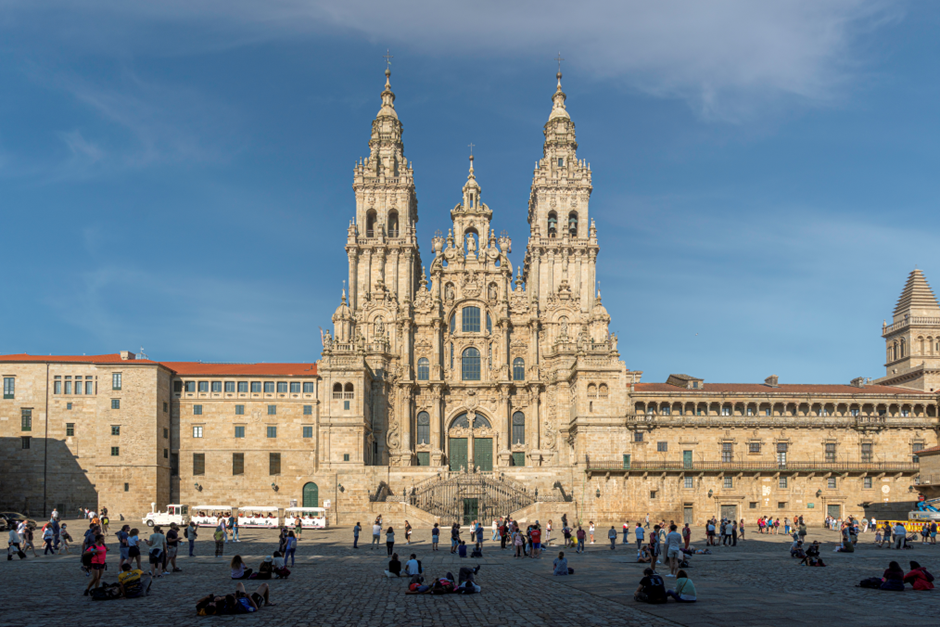
The red cross with the distinctive ends (known as the fleur-de-lis – like you see in French badges – or the Cub Scout logo) is officially known as the Cross of St James. Both in Spain and Portugal religious military orders were formed featuring this name and cross. They drew their symbolism and legend from James the Greater – one of Jesus’s apostles and the first to be martyred. He is the patron saint of Spain and his remains are believed to be buried in the Galician church of Santiago de Compostela. Even today this is one of the most visited religious sites in the Catholic world and sits at the end of the appropriately named ‘Way of St James’ pilgrimage route.

Right – listen up – there is a very interesting link here with some English teams. The very top of the Cross of St James is supposed to be a scallop (note it is a different shape to the two ‘handles’). A scallop is another symbol of St James and is featured on coats of arms – and therefore football teams – of towns in England that were along the St James pilgrimage route down to the coast to catch a ship to Galicia. Teams which feature this, and for which I have already written a GTBI post, include Bromley and Sittingbourne FC (which both feature St James’ scallops) and Exeter City play at St James Park because it sits on the town’s St James Road which led pilgrims
down to the coast.


So – ok – why all the fuss about St James in Galicia then? Aside from his remains supposedly being buried there, he also miraculously appeared in 855 during the mythical Battle of Clavijo. This battle (which never happened) is supposed to have occurred during the ‘Reconquista’ period of Spanish history when the Christians forced out the Islamic forces that had run Spain, or large parts of it, for nearly 700 years. Legend has it that St James appeared to the Christian king in a dream, commanding him to attack the next day if he wanted victory. To help ensure his prophecy came true, St James himself appeared on a white horse and personally led the charge against the Muslim forces. From then on St James earned the nickname Santiago Matamoros (St James the Moor-Slayer).
So that’s quite some story.
What a badge. From fiercely independent traders – to performing miracles in battle – to battling the English – to adopting their national game – to producing half a million cars a year. Celta Vigo’s badge is elegant, simple – and hugely complicated.
I absolutely love it.


Comments