


York City FC
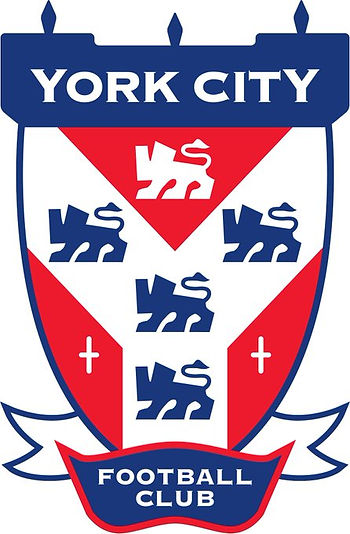
Among the clubs tipped for promotion from the National League this year are York City FC. So let’s #GetTheBadgeIn for a club, and a city, that is foundational to our nation's history.
The homekit for the 25/26 season comes in the traditional red but stitched into the fabric is a repeating pattern of longboats, runes and patterns from the Viking era. Because before it became anything else, York was a Viking capital.
Known as Jorvik during Norse rule, the city was once the heart of a powerful Viking kingdom in northern England. Archaeological digs in the city have unearthed thousands of items from that era – shoes, combs, coins, and even a Viking toilet. It’s no surprise that York today remains a hotspot for Viking reenactments and storytelling.
That sense of ancient strength is reflected in the club's badge, which takes elements from York’s coat of arms. The five lions on the badge are directly borrowed from the civic symbol of the city, which dates back to at least 1587, and quite possibly earlier – some suggest it was granted during the reign of Edward III, who ruled from 1327 to 1377. Edward was one of England’s most formidable kings, a soldier-monarch who launched the Hundred Years’ War and laid the foundations of a more centralised English state. If you wanted someone to represent royal authority and medieval power, Edward III isn’t a bad place to start.
The club’s connection to York Minster – the largest Gothic cathedral in Northern Europe – runs deeper than just the skyline. The team’s nickname, The Minstermen, honours the city’s role as a centre of Christianity for over 1,000 years. York Minster dominates the city centre, and has long stood as a symbol of continuity, faith, and cultural pride.
Older versions of the York City badge often featured Bootham Bar, one of the historic gateways to the old walled city, located not far from the Minster. These fortified gates were more than just entrances – they were statements of power, watchpoints, and tax collection posts. Bootham Bar in particular held strategic and symbolic importance and linked visually and geographically to the club’s home for much of its history – Bootham Crescent.
The club also reflects York’s industrial past – particularly in the railway sector. As a key hub for the East Coast Main Line, York became a vital junction during the age of steam. Many York fans have family histories tied to railway works, engineering yards, or station life, and that working-class connection has always been part of the club's DNA.
Of course, not every chapter has been glorious. In the early 2000s, businessman and former racing team owner John Batchelor took over the club. He made some drastic changes – rebranding it as “York City Soccer Club”, inserting a black-and-white chequered flag into the badge to reflect his motorsport interests, and aiming to attract American investment. It was, let’s say, not universally popular. Thankfully, the era was short-lived.
In 2003, fans were given the chance to vote on a new badge. The winner, designed by Michael Elgie, brought a sense of calm and continuity. His badge reintroduced the classic ‘Y’ (for York I presume), five lions from the city's coat of arms and the castle battlements that represent the city gates – a far cry from the chequered branding of the Batchelor days. And unlike the previous redesign, this one came free of charge to the club.
On the pitch, York City has carved out a proud if modest legacy. In 1955, they made the FA Cup semi-finals as a third-tier club – a record at the time. In 1984, they became the first Football League side to reach 101 points in a season. They’ve pulled off cup shocks too – beating Arsenal in 1985 with a last-minute penalty, and stunning Manchester United 3–0 at Old Trafford in 1995. More recently, they’ve twice lifted the FA Trophy at Wembley, and after leaving Bootham Crescent in 2021, they’ve started a new chapter at the York Community Stadium.
York City FC isn’t a club built on glittering trophies or endless cash. It’s built on history. On Viking battles, medieval kings, cathedral spires, steam trains, and a badge that tells its own story. In a world of franchises and plastic branding, the Minstermen are the real deal.


Comments