


Wrexham AFC's Patagonia Shirt

This one is a bit late coming, but I've finally managed to get this shirt in the end-of-season sale. And it is a beauty - one that tells a remarkable, and not widely known, story.
Wrexham's 2025 third shirt tells the story of an entire nation - on the other side of the world.
And that takes some explaining for a North Wales mining town - so let's dig a little deeper and #GetTheShirtIn:
It all begins, as so often in history, with a guy with an incredible beard. Welsh nationalist Reverend Michael D. Jones - an eccentric priest who had completed his training in Cincinnati, Ohio, before returning to Wales advocating a political solution to the issue of Welsh identity, such as independence for Wales.

However, facing resistance at home, he struck upon a radical solution. If Welsh as a language and culture was to survive, they would need to find a new homeland from which to rally support and resources. Perhaps inspired by his time in Ohio, Jones felt the Welsh needed a colony they could call their own.
They looked around, briefly even considering Palestine (which would have altered history somewhat), but eventually decided on the Argentine region of Patagonia.
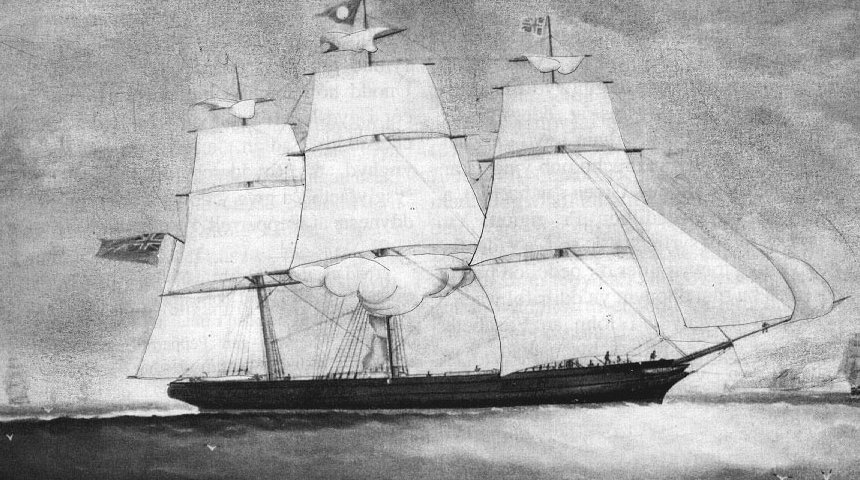
And so it was that in 1865, a small ship called the Mimosa sailed from Wales down to the South Atlantic carrying 153 settlers.
Patagonia is a huge swathe of land stretching across the southern parts of Argentina and Chile, but it is also a harsh environment. The Andes Mountains shield it from the Pacific rains, making it one of the driest areas in the Americas, while its vast flat plains encourage strong winds that blow away topsoil in minutes - not ideal farmland. At least, not without some Welsh ingenuity.

Jones negotiated with the Argentine government to settle in the remote Chubut Valley area of Patagonia - which suited the Argentines perfectly, as the region was subject to a tussle between themselves and Chile. More Europeans settling in Argentina's name served a dual purpose for them.
The dream of the settlers was to create "a little Wales beyond Wales".
The reality was brutal.
The first years brought drought, crop failures and hunger. Many questioned whether the settlement could survive at all. Yet they dug deep, quite literally, and gradually transformed the valley into productive farmland, introducing new irrigation methods and eventually, in true Welsh fashion, building a railway linking their communities to the coast (and their exports to global markets).

There were disagreements with the Argentine authorities over issues such as compulsory military service on Sundays, which clashed with the settlers' deeply held religious beliefs. Limited farmland also forced some families to leave for Canada and elsewhere in the early 20th century.
But through persistence and that natural Welsh resilience, they survived and thrived, leaving something even more enduring than fields and railways.
They achieved their dream - they built a little Wales. Known as Y Wladfa (The Colony).
Today, more than 160 years later, towns such as Trelew ("Town of Lewis"), Trevelin, Gaiman and Dolavon still bear unmistakable Welsh roots. Visitors can walk into traditional Welsh tea houses, enjoy bara brith (Welsh tea bread), hear Welsh hymns and even attend the Eisteddfod, the famous Welsh festival of literature, poetry and music, now held in both Welsh and Spanish. The region even boasts its own flag - beating the distinctive Welsh dragon at the centre of the sku blue and white of Argeninta.

Perhaps most remarkably of all, Welsh is still spoken there. Estimates vary, but somewhere between 1,500 and 5,000 people continue to speak a distinct Patagonian dialect of Welsh, while around 70,000 people in the region claim Welsh ancestry.
For a colony founded by just 153 pioneers, that is an extraordinary legacy.
There is, however, an important part of Patagonia's story that should not be overlooked.

The Welsh settlers arrived in Chubut in 1865, before the Argentine government's infamous Conquest of the Desert campaign began in 1878. The Welsh themselves played no part in this military campaign. However, the wider expansion of European settlement across Patagonia came at a devastating cost to the region's Indigenous peoples, particularly the Mapuche and Tehuelche. Through a series of military operations, the Argentine state forcibly displaced and killed thousands of Indigenous inhabitants, opening vast areas of Patagonia to European colonisation. Those newly acquired lands would go on to become the foundation of Argentina's huge agricultural economy, with enormous expanses converted into cattle ranches and farmland that helped turn the country into one of the world's great agricultural exporters. The Welsh colony was not responsible for these events, nor was it established because of them, but they form an important part of the wider history of Patagonia and deserve to be remembered alongside the remarkable story of Y Wladfa.
While Wrexham has become one of the world's most famous football clubs in recent years, but this shirt reminds everyone that Welsh identity has always travelled far beyond the country's borders. Before a couple of Hollywood actors discovered North Wales, a handful of ordinary Welsh families had already carried their nation's language and traditions across the Atlantic and preserved them for generations.
It's a shirt that celebrates resilience, migration, identity.
Not many football kits can tell a story quite like this one.


Comments