


Salford City FC

Salford in Greater Manchester who currently play in League Two (although on the 25th May this year have a chance to win promotion at Wembley against Notts County.
Founded in 1940 as Salford Central, the club spent many years in local and non-league football before climbing steadily through the divisions. Their rise was turbo boosted after a 2014 takeover by former Manchester United F.C. players Nicky Butt, Ryan Giggs, Gary Neville, Phil Neville, and Paul Scholes, later joined by David Beckham.
Salford play at the Peninsula Stadium, traditionally wore tangerine and black colours, and are nicknamed “The Ammies”, a reference to their former name, Salford Amateurs. So that's the club - what of their badge and their heritage?
Well, before Manchester became the giant that dominated north-west England, Salford was actually the more important settlement.
In the medieval period, Salford functioned as the main market town of the area, while Manchester was smaller and less economically significant. Salford’s position on the River Irwell and its early market rights helped it develop first, with trade and local governance centred there long before industrial Manchester exploded into global prominence. The city's coat of arms features two lions as 'supporters' (holding up the shield) - and it is from there that Salford City FC as has always taken the lion on its badge. The recent rebrand has switched which lion is used - picking the left hand one so it is looking forwards, rather than backwards.
Over time, however, Manchester’s textile boom, railway links, and commercial expansion eventually overtook its older neighbour, gradually absorbing it into the shadow of the much larger city next door. Yet Salford remained a hugely important industrial centre in its own right.
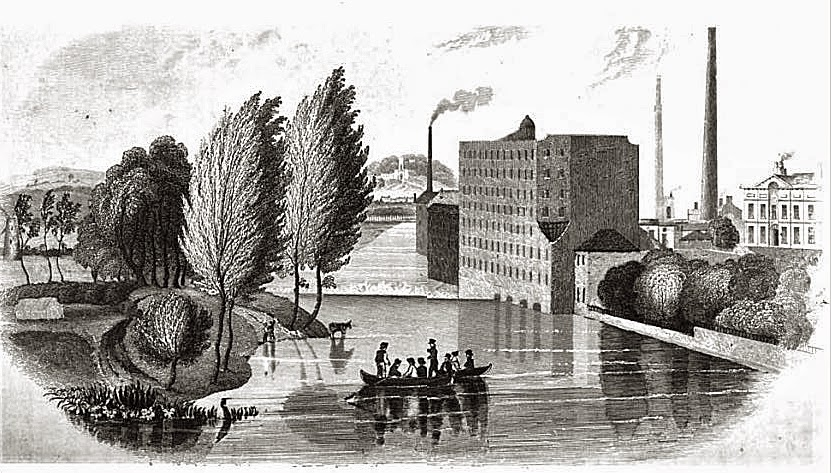
By the 18th and 19th centuries, the city had become one of Britain’s great factory districts, heavily focused on cotton and silk spinning and weaving during the Industrial Revolution. Chimneys, mills, warehouses, and workers’ terraces dominated the skyline. The opening of Salford Docks in 1894 transformed the city further, making it a major inland port connected directly to the sea through the Manchester Ship Canal. Goods from across the world passed through the docks, helping fuel the wider industrial economy of Lancashire.

The two circles on the bage are supposed to reflect the Salford gas works - two large gasholders - which for a century dominated the view in and out of the city. They were discontinued in 2013 and torn down in 2019. But for more than a hundred years they were a landmark and made their way into the famous song 'Dirty Old Town' first performed by Salford song writer Ewan MacColl and then later the Pogues. This has now become the official club anthem played every match day.
But like many industrial British cities, Salford suffered badly during the 20th century. The collapse of heavy industry, the decline of the docks, and deindustrialisation left large areas run-down and associated with poverty, crime, and social deprivation. Vast slum clearance programmes began as early as the 1930s, with terraces demolished and communities reshaped through waves of regeneration projects.
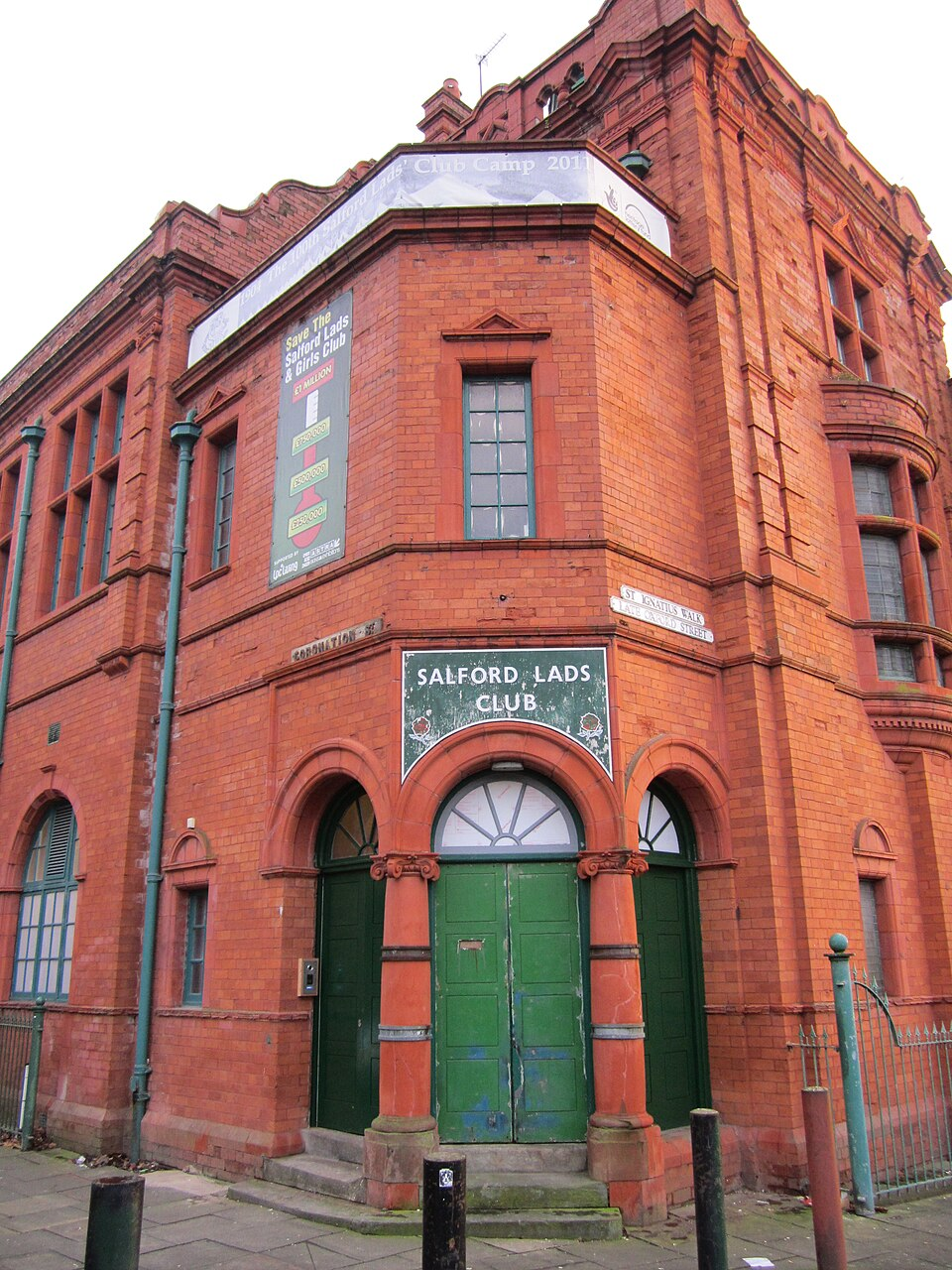
One hang over from this industrial past can be seen in the rose, held by the lion on the badge. It is taken from the Salford Lads' Club. Opened in 1903 and funded by local businessmen it was designed as a social space and recreation area for young boys in the area to 'keep them out of trouble'. Fittingly, at the opening the guest of honour was Baden Powell - the founder of the Scouts movement. The club offered sports like boxing and football to the residents of the poorer areas of Salford. It still operates today and holds an annual camp each year. Over its more than a century of operation it has provided invaluable support and guidance to generations of locals.

In recent decades Salford has undergone another transformation. The redevelopment of the former docklands into Salford Quays and MediaCityUK helped reinvent part of the city as a modern media and digital hub. From 2007 onwards, major organisations including the BBC and ITV Granada established major bases there. Alongside them sit institutions such as the University of Salford, Salford City F.C., and Salford Red Devils.
From its origins as the local trading market town, to the very heart of the industrial revolution and into the new digital age - its people have kept the city flourishing - organising thesmelves to bring along even the poorest and most vulnerable as they went.
That is a superb heritage to celebrate every match day.


Comments