


Rochdale AFC
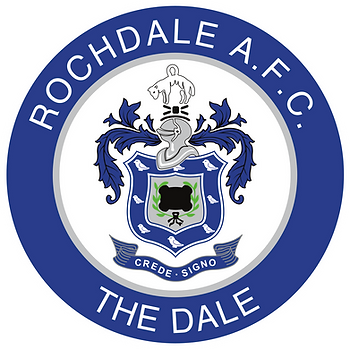
Rochdale have a wonderful badge rooted in the Borough’s Coat of Arms and its rich history, so let's honour them and #GetTheBadgeIn.
The black shape in the middle is a sack of wool (known as a Woolpack – think Emmerdale). This symbolises Britain’s wool trade, which powered East Anglia in the Medieval Period and made the North-West an industrial superpower. The "fleece of wool" (the dangling sheep) at the top reinforces this, and Rochdale FC was even formed after a meeting on Fleece Street in 1907. The shear number of sheep references here is baarmy.
Rochdale became a centre of the wool trade during the Industrial Revolution, thanks to its location on the River Roch, which powered water mills and made shipping easy.
The town’s importance grew in the early 1800s with the Rochdale Canal, linking Yorkshire and Lancashire. This superhighway of commerce shipped cotton, wool, coal, limestone, timber, salt, and more.
As the Empire expanded, the area switched from local sheep’s wool to imported cotton from the Americas. Rochdale played a key role in Manchester’s "Cottonopolis" reputation. The green "laurel wreath" around the woolpack represents branches from the cotton tree – showing the importance of both materials to the town.
Beneath the fleece is a millrind, a tool used in mills to secure the millstone. Another nod to the local industries in the area.
The badge also features eight martlets within its blue trim. These birds, common in heraldry, are from the Dearden family, who owned the region after buying it from the Byrons in 1824.
The Byrons were fascinating. John Byron fought for Charles I during the Civil War and was made a Baron for his bravery. He later died in exile in Paris, hiding out with his other Royalist chums.
The most famous Byron was the Romantic Poet Lord Byron. He led an incredible life and ended up in Greece, fighting for in their War of Independence against the Ottoman Turks. Desperate to help, he sold Rochdale Manor in 1823 to raise funds for their fight.
The club should arrange an annual Rochdale-Greek pre-season friendly called the Byron Cup.
Rochdale, at the forefront of the Industrial Revolution, has also led progressive politics. The Rochdale Society of Equitable Pioneers founded the first cooperative society. Their MPs have included protest leaders, although their election of George Galloway in 2024 (briefly) was a less glamerous chapter in the same traditions.
So that's The Dale. Wool, cotton, canals; Royalists, Rebels, and (Greek) Revolutionaries.
A remarkable heritage - lets hope they can get back into the EFL soon.


Comments