


Hamburg SV

Hamburg SV (Sport-Verein = Sports Club) is a German Bundesliga team from the large and important port city of Hamburg. It is, like many European and Asian teams, a multi-sports club, but its most famous and biggest team by far is its football club.
Since their foundation in 1919 they’ve had some remarkable success down the ages: six-time German league champions and winners of the German Cup three times.
Last season, they won promotion back to the top division, and this season have a good buffer so far to avoid immediate relegation and look to establish themselves again as one of the big boys of German football.
One of the club’s nicknames is “The Dinosaur”, given that it is one of the oldest clubs in Germany. This is partly, again, due to its port location. Football was invented in the factory towns of England (and codified on the fields outside Cambridge University), and so became a major British cultural export. British sailors stopped in Hamburg and played the game with locals, helping to inspire the birth of football in the city. Initially, Hamburg boasted three clubs, but after the First World War – and the associated loss of local manpower – the three clubs merged to form one, giving them a better chance of competing on the national stage.
Hamburg itself sits about 100 km inland from the actual coast, but at the end of the wide Elbe River. This unique position has made it perfect over the centuries as Germany's natural port. It gave direct access to the very heart of central Europe. Its wharfs bustled with incoming foreign goods and then loaded up river barges with all the grain, timber, furs, meat, leather – and beer – that the German hinterland could produce.

Underpinning this geographical advantage was a smart political one – the Hanseatic League. This organisation of North Sea ports created a large network of free-trade cities. From Ipswich on the east coast of England to Riga in Latvia, the goods of Northern Europe and the Baltic could be packaged up and shipped about with minimal taxes or paperwork. An embryonic EU – and it made them rich.
Hamburg, sitting at the centre of this network, grew especially so. When, in 1871, the German states united into the modern nation state we know today, Hamburg joined – but on condition it could retain its free port status. It did, and trade was turbo-boosted by the new German single market. The city today, with its grand and beautiful churches, homes, merchant quarters and city halls, is a testament to its wealth.

Along with heavier goods, Hamburg also developed itself as the European centre of the coffee trade – with even today around one-third of all the continent’s coffee coming in via the port. The historic Kaffeebörse (coffee exchange) would be filled with buyers weighing and inspecting different beans and haggling for the best prices. Today, four of Europe’s biggest coffee companies (Tchibo, J. J. Darboven, Neumann Gruppe, H. C. Rohde) are still based in the city – the city even boasts the International Coffee Plaza in the HafenCity district with its own giant coffee bean sculpture.
It should also briefly be mentioned that, when it wasn’t exporting materials, it exported its own men and women. In the 19th century, it was residents of Hamburg who took their local delicacy – seasoned minced meat patties – to New York as they emigrated. And the US hamburger was born.

Back in Hamburg itself, however, they had to find a way to handle the huge boom in exports that its trading connections required. Accordingly, the city built the world’s largest complex of warehouses. Set on timber pile foundations by the water’s edge, they allowed seamless loading and unloading of goods. Known as the Speicherstadt (City of Warehouses). These were the focus of heavy Allied bombing during the Second World War for obvious reasons - but were later rebuilt and today house a mix of commerical, residential and retail areas. Today the shipping legacy lives on in Hapag-Lloyd – one of the world’s biggest container shipping lines that still proudly calls Hamburg home.
The football team’s badge then – to truly #GetTheBadgeIn – is based on a stylised version of the “Blue Peter” signal flag a ship would fly shortly before casting off. It literally means “ready to sail”. Or, as Gen X might shout down his online gaming mic, “Let’s goooooo”.
So there we have it.
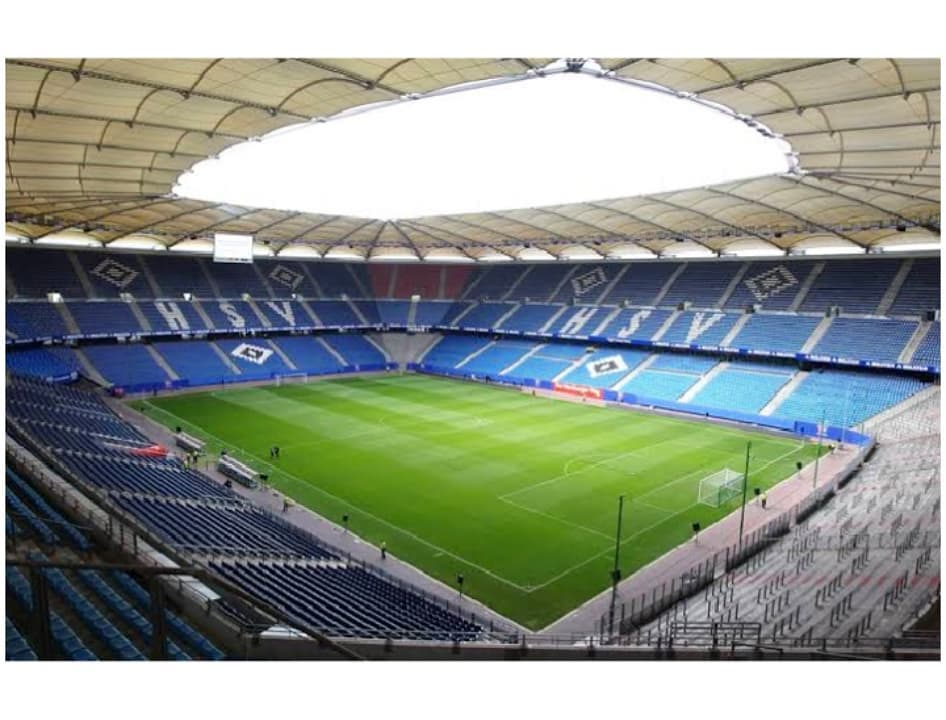
Hamburg SV. A sleeping giant of a football club representing the logistical and shipping giants of Europe. And as the club has just been promoted again to the big leagues, they can wear their badge in its truest meaning – they are indeed ready to sail once more.


Comments