


Calcio Padova

Next up on our tour of Italian cities and their football teams is the ancient city of Padua. Nestled a few miles inland from Venice in the north-east corner of Italy, it has a remarkable history.
They are represented on the pitch by Calcio Padova who are currently plying their trade in Serie B amongst the likes of Ashley Cole’s Cesena. Formed in 1910, their best days came in the late 1950s and early 1960s, recording a third-place finish in Serie A. Since then, they have bounced between Serie B and C, with a brief early-1990s reappearance in the top flight. However, their trajectory is currently back upwards. They were promoted back to Serie B last season and are currently sitting mid-table, hopefully enough to keep them up and allow them to build again next year.
Their badge, however, links us to an incredible tale that places this city at the very heart of the Renaissance and at the forefront of astronomy, art, and medical advances. So, let’s #GetTheBadgeIn and see what we can learn...
The badge is immediately familiar to all Englishmen, and Turks too, as it features the flag of St George. Saint George was and still is hugely popular across Italy, with Genoa CFC on the opposite coast also carrying his symbol. They even wore a kit this season that looked like a flag-waving Brexiteer’s fever dream. Alas, the symbol is very much European in origin. The cognitive dissonance required to process that is probably best left for another day.

St George became associated with Padua back in 1370 when the wealthy Lupi family, whose name wonderfully translates as “wolves”, commissioned a chapel in his honour that also doubled as a family burial site. Called the Oratory of St George, it contains some of the most beautiful frescoes you are ever likely to see. This cemented the connection between St George and the city, ensuring the flag found its way onto Padua’s coat of arms and, eventually, onto the football club’s badge.

The Lupi family were, in a sense, competing with another great local dynasty: the Scrovegni family. A few years earlier they had built the famous Scrovegni Chapel, which also boasted extraordinary frescoes. What makes this chapel particularly entertaining is that it was commissioned by Enrico Scrovegni, son of a wealthy banking family, as penance for the family fortune having been built on usury, the charging of interest on loans. Presumably the idea of simply stopping the usury never quite occurred to anyone. A very medieval compromise.
Together, these two chapels form part of today’s UNESCO World Heritage Site known as the “Padua Frescoes”. These paintings were not just beautiful works of art; they became the laboratory of Renaissance humanism. The artists depicted people with greater realism, emotion, and movement than ever before, techniques that would come to define Renaissance art across Europe. If Renaissance painting was born anywhere, there is a strong argument that it was born inside the chapels of Padua.
As such, the 2022–23 Calcio Padova third kit was a genuinely beautiful effort, incorporating those same frescoes directly into the shirt design.
Yet, even that is probably not the thing most people know Padua for.
Arguably its greatest contribution to the wider world was its university.

The University of Padua, founded in 1222, is one of the oldest universities in Europe and among the most important institutions of the Renaissance. Its students and teachers included Nicolaus Copernicus (heliocentrism), Galileo Galilei (astronomy and physics), and William Harvey, the Englishman who discovered blood circulation.
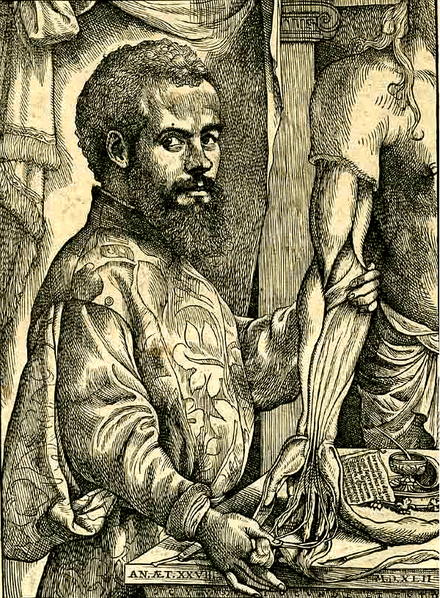
The university became especially famous for medicine through the work of Andreas Vesalius, who transformed anatomy by using direct human dissection rather than relying solely on ancient texts. His work corrected centuries of errors from the Roman doctor Galen, whose teachings had gone largely unquestioned for over a millennium, and helped lay the foundations of modern scientific medicine.

A lasting symbol of Padua’s medical legacy is its Anatomical Theatre, built in 1594 and considered the world’s oldest surviving permanent anatomical theatre. Designed with steep wooden galleries around a central dissection table, it allowed students to watch anatomy demonstrations almost like spectators at a performance. These spaces were called “theatres” because dissections were public displays of learning, with professors presenting the human body almost like actors on a stage. This Renaissance belief in learning through direct observation became central to modern medicine, and the term “operating theatre” still survives today.
And the incredible Renaissance connections do not stop there. Before we move on from Padua, we need to address the other, older badge once used by the football club which, to the untrained eye, looks suspiciously like a homage to Ipswich Town F.C..

On some historic crests, the right-hand side of the shield features a horse with its hoof resting atop what looks remarkably like a football, just like my own beloved Town. Alas, this is not a Suffolk Punch representing Kieran McKenna’s men. Instead, it depicts the famous Gattamelata statue standing proudly in Padua’s city centre.

Created by Donatello, while presumably taking a brief break from fighting crime under the tutelage of Splinter, it was the first full-sized bronze equestrian statue produced since the days of the Roman Empire. Once again, Padua found itself at the forefront of Renaissance innovation in realism, proportion, and artistic detail. The horse carries the Venetian general Erasmo da Narni, better known as Gattamelata, while its raised hoof rests upon a cannonball. Which makes its resemblance to Ipswich’s football-playing Suffolk Punch genuinely uncanny.
So there we have it.
Rich bankers searching for forgiveness through architecture, the laboratory of Renaissance painting and sculpture, and the birthplace of modern medicine, all somehow resulting in a football crest that looks like a mash-up of the England badge and the Ipswich Town F.C. crest.
There is a lot to be proud of in this club.
A pre-season friendly against fellow “horse resting on a ball” badge-bearers Ipswich would be superb.

Enjoyed discovering the history behind this badge? This story also appears in Wolsey Academy's Renaissance History curriculum, where students explore the people, places, ideas and events that shaped the Renaissance through enquiry-based lessons, projects and historical investigations.
Teachers can browse the full collection at www.wolseyacademy.com/shop and receive 50% off any lesson bundle using the exclusive #GetTheBadgeIn code GTBI50.


Comments